Tiếng Việt


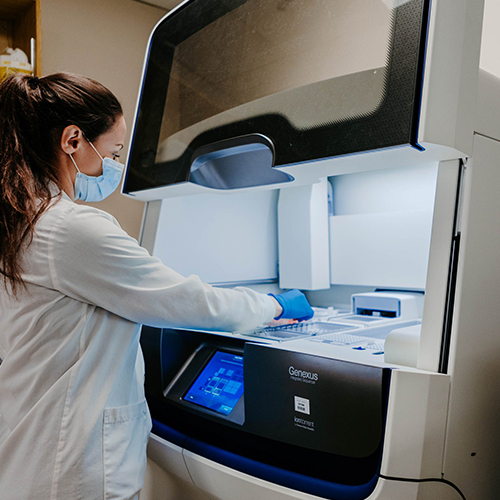
Laboratory Equipment


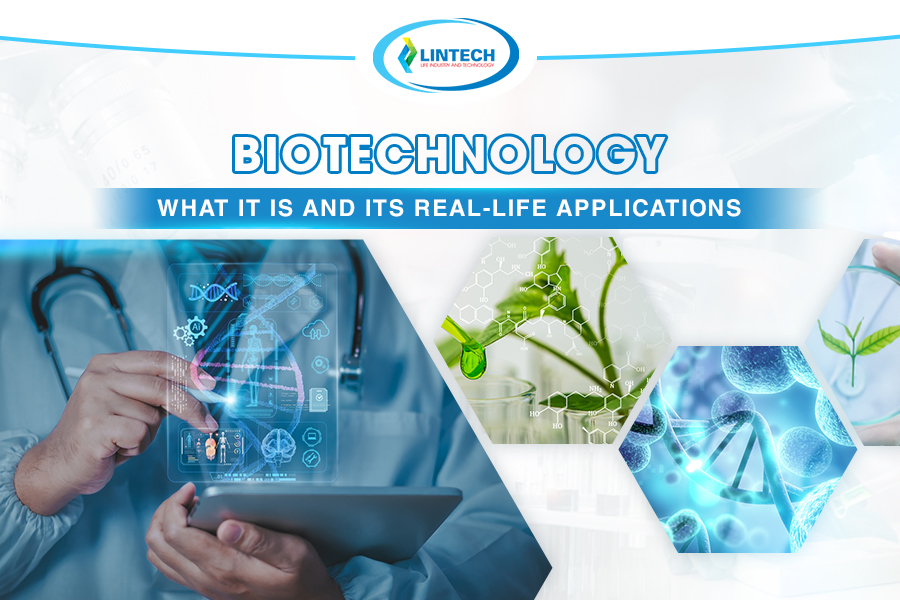
Biotechnology, or biotech, is an interdisciplinary scientific field that uses living systems, organisms, or their components to develop useful products and processes. From producing life-saving drugs to creating pest-resistant crops, biotechnology brings countless benefits. In this article, we will explore in depth the definition, history, types, practical applications, and related ethical issues to help you better understand what biotechnology is and why it is so important

At its most basic definition, it is the combination of biology and technology to harness biological processes for creating products or services that serve humanity. It involves using microorganisms, cells, enzymes, or genes for industrial-scale production. For example, biotechnology enables genetic modification to create new organisms with desired traits, such as drought-tolerant crops or more effective antibiotics.

The Organisation for Economic Co-operation and Development defines biotechnology as an interdisciplinary field that uses living organisms or their products to transform materials, generate knowledge, goods, and services. This includes areas such as genetics, biochemistry, and bioengineering. Biotechnology is not limited to using primitive organisms but also applies modern tools like CRISPR-Cas9 gene editing for precise DNA interventions.
In essence, what is biotechnology if not the technology of hope? It improves quality of life by addressing issues of food scarcity, disease, and environmental pollution. Unlike traditional chemical technology, biotechnology is often more environmentally friendly because it relies on natural processes.
To understand what biotechnology is, Lintech JSC presents its history. Biotechnology has existed since ancient times, even though people were not fully aware of it back then. For example, ancient Egyptians and Chinese used fermentation to make beer, wine, and bread by harnessing yeast and bacteria.

The term “biotechnology” was coined in 1919 by Hungarian engineer Karl Ereky, referring to the production of products from raw materials using living organisms. The 20th century marked a turning point: In 1953, James Watson and Francis Crick discovered the structure of DNA, paving the way for genetic engineering. By the 1970s, recombinant DNA technology emerged, allowing gene transfer between organisms.
Modern biotechnology is divided into three generations:
Today, biotechnology continues to advance with applications like mRNA vaccines against COVID-19, demonstrating its limitless potential.
What is biotechnology when classified? To make it easier to remember, people often use a color system based on applications:

This classification helps clarify what biotechnology is in specific fields.
One of the most important applications of biotechnology is in agriculture, helping increase productivity and reduce risks. The Green Revolution tripled food production through improved varieties and chemical fertilizers, but it still falls short for a rapidly growing population. Biotechnology provides solutions such as genetically modified crop-based agriculture.

For example, tissue culture techniques allow the regeneration of an entire plant from a small part in a special nutrient medium. This ability is called totipotency, enabling rapid multiplication of thousands of identical plantlets. Crops like bananas, apples, and tomatoes have been commercially produced using this method, known as micropropagation—one of biotechnology’s micropropagation techniques.
Biotechnology also helps obtain healthy plants from diseased ones. Shoot apical meristems are often virus-free, so they can be cultured in vitro to produce virus-free plants, as seen in bananas, sugarcane, and potatoes.
A notable application is somatic hybridization: Protoplasts (cells without walls) from two different plant varieties are isolated and fused to create somatic hybrids. For example, fusing tomato and potato creates a pomato—with tomatoes growing above and potatoes below—though it is not yet commercially perfect.

GM crops represent the pinnacle: Genes are edited so plants can tolerate cold, drought, salinity, or heat. They reduce chemical pesticide use, minimize post-harvest losses, improve mineral efficiency, and enhance nutritional value (such as Golden Rice rich in vitamin A).
Specific example: Bt cotton uses a gene from the bacterium Bacillus thuringiensis (Bt) that produces a toxin lethal to insects. This protoxin is inactive in the bacterium but activates in the insect gut, causing death. Genes cryIAc and cryIIAb control bollworm pests, significantly reducing pesticide use.
Another example: Root-knot nematode resistance via RNA interference (RNAi). A specific nematode gene is introduced into the host plant through Agrobacterium, producing dsRNA that silences the nematode’s mRNA, preventing parasite survival. This protects tobacco plants from Meloidogyne incognita.
What is biotechnology in medicine? It has revolutionized drug production and diagnostics. Recombinant DNA technology enables mass production of safe drugs without immune reactions, unlike animal-derived products.

Example: Genetically engineered insulin. Human insulin consists of A and B chains linked by disulfide bonds. Previously sourced from pig or cow pancreases, it often caused allergies. In 1983,
Eli Lilly produced separate A and B chains in E. coli, then combined them into complete human insulin.
Gene therapy: Correcting genetic defects. In 1990, a 4-year-old girl lacking the ADA enzyme for immunity was treated by inserting the ADA gene into her lymphocytes using a retroviral vector. If applied at the embryonic stage, it could provide a permanent cure.
Molecular diagnostics: PCR amplifies DNA to detect pathogens at low concentrations, such as HIV or cancer mutations. ELISA detects antigens/antibodies. Radioactive DNA probes hybridize with complementary DNA to identify gene mutations.
You can learn more about: What Role and Applications Does Molecular Biology Have in Life?
In industry, biotechnology produces enzymes for detergents and food; biofuels from biomass; biodegradable bioplastics.
In the environment, microorganisms treat waste, remediate contaminated soil, or purify water.

Genetically Modified Animals and Ethical Issues
Transgenic animals like mice and sheep aid research on physiology, diseases, and medical protein production. They are used to test vaccine safety and toxicity.
However, biotechnology raises ethical concerns: Ecological risks from GMOs, biopiracy—using biological resources without compensation.
Biotechnology is truly the key to a sustainable future, from boosting agricultural productivity to curing intractable diseases. With its diverse applications, this field promises to address global challenges. However, ethical balance and safety must be maintained. If you’re interested, explore further to see how biotechnology is changing the world.