
 Tiếng Việt


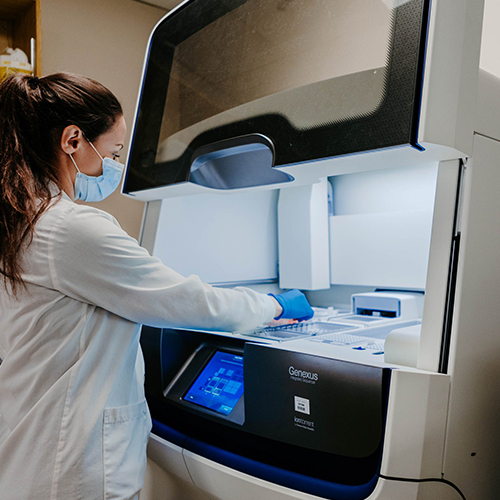
Laboratory Equipment


✅ Maintenance
✅ Temperature Verification / Thermal Calibration
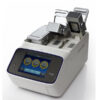
PCR MiniAmp™ or MiniAmp™ Maintenance and Calibration Services:
The PCR machine is a key instrument in modern molecular biology laboratories, enabling highly accurate DNA amplification reactions.
Among today’s popular models, the Mini AMP PCR and Mini AMP Plus Thermal Cycler stand out for their compact design, stable performance, and exclusive VeriFlex technology that supports optimal thermal gradient capabilities.
You can refer to: Laboratory equipment repair services
However, to maintain superior performance and ensure reliable PCR results, periodic maintenance and calibration of the PCR machine is an indispensable factor.
Maintenance and calibration of a PCR machine is a specialized technical process that includes inspection, cleaning, and adjustment of critical parameters of the Peltier heating block, cooling fans, and sensor systems.

For the Mini AMP PCR and Mini AMP Plus Thermal Cycler, these activities help maintain temperature accuracy at ±0.25°C and temperature uniformity below 0.5°C, in accordance with Thermo Fisher Scientific specifications.

The process not only removes accumulated dust and residues but also verifies ramp rates of up to 3.5°C per second on the block and 2.7°C per second on the sample.
This ensures the PCR reaction proceeds correctly through the denaturation, annealing, and extension cycles. Many laboratories in Vietnam choose professional maintenance services to avoid interruptions in research or medical diagnostics when using the Mini AMP Plus.
Regular maintenance of PCR machines brings many practical benefits, especially for the Mini AMP PCR and Mini AMP Plus models that operate continuously in laboratory environments.

Dust and residue buildup on the thermal block or cooling fans can slow down the cooling rate, leading to temperature overshoot or non-uniformity across sample wells.
As a result, PCR efficiency decreases, primers may anneal incorrectly, or non-specific amplicons are produced. In addition, maintenance helps detect early damage to components such as the Peltier module or RTD sensors, thereby avoiding high repair costs.

According to the experience of senior calibration engineers at Lintech JSC, performing maintenance every 6 to 12 months, depending on usage frequency, can double the machine’s lifespan and significantly reduce the risk of cross-contamination between runs.
With the Mini AMP PCR and Mini AMP Plus Thermal Cycler, which support cloud connectivity and fleet control, maintenance also ensures that the software is always updated with the latest firmware, preventing system errors.
The calibration process plays a decisive role in ensuring the repeatability and reliability of experimental results.
The Mini AMP PCR and Mini AMP Plus rely entirely on precise temperature profiles to perform the three core stages of PCR: denaturation at 94 đến 95°C, annealing at 50 đến 65°C, and extension at 72°C.
Even a small deviation of 0.5°C can cause the reaction to fail, especially in primer optimization applications using gradient mode on the Mini AMP Plus Thermal Cycler.
Calibration according to NIST standards confirms temperature accuracy, uniformity, and hold times, thereby preventing false-negative or false-positive results in infectious disease diagnostics.
Laboratories following ISO 17025 or GxP standards are required to perform periodic calibration to comply with legal regulations. Failure to calibrate on time can lead to wasted expensive reagents and delays in research progress.
The maintenance and thermal calibration process for PCR machines includes many in-depth steps performed by certified technicians.
The first important step is a comprehensive inspection of the machine, including its physical condition, power cables, and heated lid.
Next, the 96-well thermal block of the Mini AMP Plus Thermal Cycler is cleaned with a non-corrosive specialized solution to remove DNA and salt residues.
The cooling fans and cooling system are checked to prevent overheating. Then, a multi-channel reference device is used with temperature sensors placed in representative sample wells to measure accuracy, uniformity, and ramp rates.
For the Mini AMP PCR and Mini AMP Plus, technicians run the machine’s automatic verification test, then adjust offsets if necessary according to the manufacturer’s instructions. Temperature calibration is performed at multiple points such as 4°C, 37°C, 72°C, 95°C, and 100°C to ensure the error stays within the allowed limit of ±0.25°C. The entire process concludes with a detailed report and calibration certificate, giving users confidence when running important experiments on the Mini AMP Plus Thermal Cycler.
Maintenance and calibration of the Mini AMP PCR and Mini AMP Plus Thermal Cycler carry profound significance in terms of science, economics, and regulatory compliance.
First, it ensures scientific accuracy, providing highly repeatable PCR results that support gene research, disease diagnosis, and food safety testing.
Second, from an economic perspective, the cost of regular maintenance is much lower than emergency repairs or replacing a new machine. It also helps laboratories avoid legal risks when participating in projects that require traceability and calibration certification.
Finally, maintenance and calibration contribute to environmental protection by extending equipment lifespan and reducing electronic waste. Many organizations in Vietnam have proven that investing in professional services for the Mini AMP Plus not only improves productivity but also creates a competitive advantage in the field of molecular biology.

In summary, maintenance and calibration of PCR machines is a crucial step that cannot be overlooked to fully exploit the potential of the Mini AMP PCR, Mini AMP Plus, and Mini AMP Plus Thermal Cycler.
You may also be interested in: Laboratory Equipment Calibration
By following standard procedures, you will have equipment that always operates stably, delivers reliable results, and saves long-term costs. If your laboratory is using these models, please contact a reputable calibration service immediately for free consultation and a suitable maintenance plan.
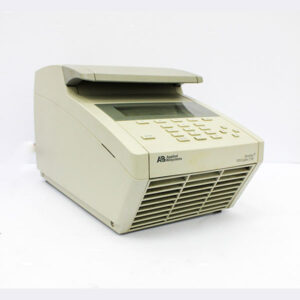
Applied Biosystems
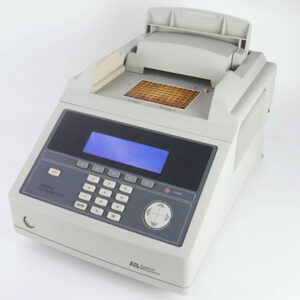
Applied Biosystems
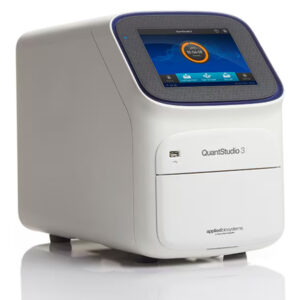
Applied Biosystems
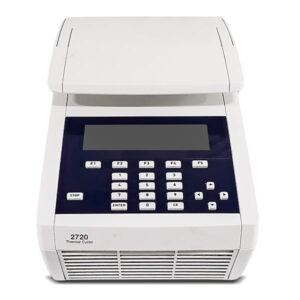
Applied Biosystems
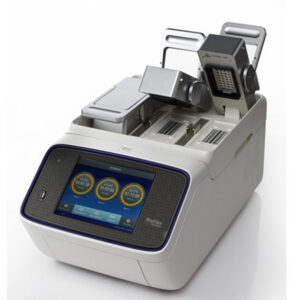
Applied Biosystems
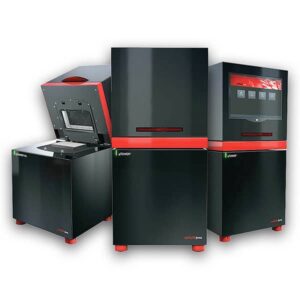
Maintenance & Calibration
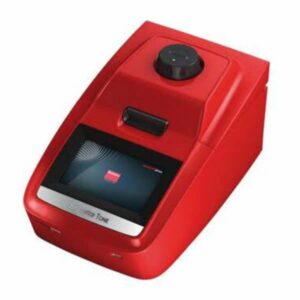
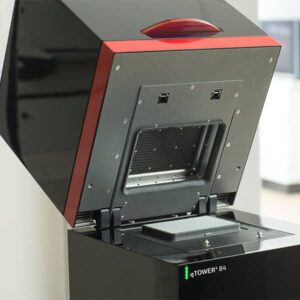
Maintenance and Calibration of the Analytik Jena qTOWER Real-Time PCR System







Reviews
There are no reviews yet.