
 Tiếng Việt


Laboratory Equipment


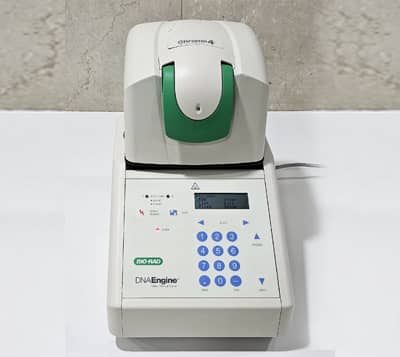

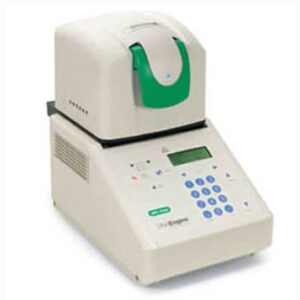
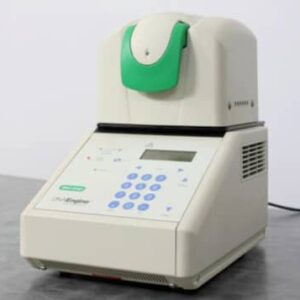


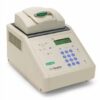
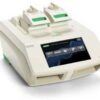
PCR Bio-Rad Chromo4 Services Include:
✅ Maintenance ✅ Temperature Verification / Thermal Calibration
Advantages of The PCR Bio-Rad Chromo4 Maintenance and Calibration Services:
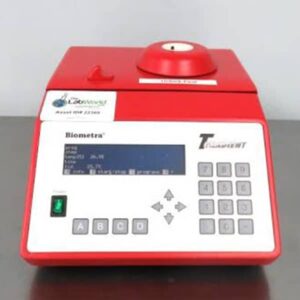
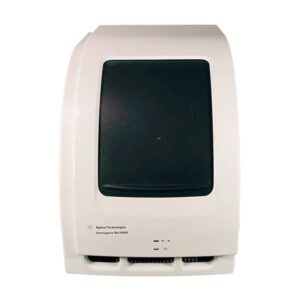
The Bio-Rad Chromo4 is a four-color Real-Time PCR system that combines the DNA Engine thermal cycler with the Chromo4 optical detection module. It is widely used in molecular biology laboratories throughout Vietnam due to its high sensitivity and stable fluorescence signal detection. However, after extended use, both the optical system and thermal block can drift from their original specifications, directly affecting the accuracy of gene amplification results. For this reason, routine maintenance and calibration of the Bio-Rad Chromo4 are not only recommended by the manufacturer but are also required under laboratory quality management systems such as ISO 15189 and ISO 17025.
This article explains why Chromo4 maintenance and calibration are essential, outlines the temperature verification process, and highlights the key criteria for selecting a reliable service provider.
PCR instruments in general, and the Bio-Rad Chromo4 in particular, operate by continuously cycling through different temperatures to amplify target genetic material while simultaneously using an optical detection system to monitor fluorescence signals in real time. Even a minor deviation in thermal block temperature or a reduction in excitation light intensity can significantly affect Ct (Cycle Threshold) values, potentially leading to incorrect diagnoses or unreliable research results.
You may also be interested in: Laboratory Equipment Calibration
Therefore, maintenance and calibration involve far more than basic cleaning. They include systematic inspection, measurement, and adjustment of critical operating parameters to ensure the instrument performs according to the manufacturer’s original specifications.
For clinical laboratories, food microbiology testing facilities, and molecular biology research centers, maintaining a regular maintenance and calibration schedule provides several important benefits.
Real-Time PCR results are only reliable when denaturation, annealing, and extension temperatures are precisely controlled across every reaction well. Routine calibration helps identify temperature variation across the 96-well block, reducing the risk of false-positive or false-negative results.
Preventive maintenance helps identify worn components such as cooling fans, Peltier elements, and optical light sources before serious failures occur, minimizing the need for costly repairs or major component replacement.
Laboratories accredited to ISO 15189 or operating under Good Laboratory Practice (GLP) requirements must maintain valid calibration records and certificates for critical equipment. These records are often reviewed during audits and quality assessments.
Compared with the cost of unexpected equipment failure and laboratory downtime, routine maintenance and calibration are significantly more cost-effective and allow laboratories to plan maintenance proactively rather than react to emergencies.
Temperature performance is one of the most critical factors affecting PCR amplification efficiency. As a result, temperature verification and calibration must be performed using established procedures and calibrated measurement equipment.
You can refer to: Laboratory equipment repair services
Technicians use certified reference temperature probes positioned at multiple locations within the 96-well block. The instrument is then run through a simulated PCR thermal profile while temperature readings are collected and compared with programmed setpoints.
Heating and cooling ramp rates directly influence primer annealing efficiency and DNA denaturation performance. If ramp rates become slower than the original manufacturer specifications, PCR run times may increase and amplification efficiency may decline.
The heated lid prevents condensation from forming inside PCR tubes during thermal cycling. If lid temperature or lid pressure is incorrect, uneven evaporation can occur, altering reagent concentrations and affecting reaction performance.
For the Chromo4 platform, optical calibration is equally important. Technicians evaluate the sensitivity and stability of all four fluorescence detection channels to ensure minimal spectral crosstalk and acceptable background signal levels.
Upon completion, the calibration provider issues a calibration certificate and detailed measurement report documenting actual deviations and confirming whether the instrument meets operational requirements or requires further adjustment or repair.
Many laboratories perform routine cleaning internally. However, temperature and optical calibration require specialized measurement equipment, dedicated software tools, and properly trained technicians. The following are key reasons to use professional maintenance and calibration services.
Technicians possess extensive knowledge of both the hardware architecture and Opticon Monitor software used by the Chromo4 platform, allowing them to diagnose hardware and software issues effectively.
Calibration is performed using reference instruments that maintain traceability to national measurement standards, ensuring legally valid and audit-ready calibration results.
Service providers maintain access to original or compatible replacement parts, reducing downtime caused by extended component sourcing delays.
Comprehensive calibration reports and certificates are supplied to support ISO accreditation activities and routine quality audits.
Post-service warranty and technical support are typically provided, ensuring rapid assistance should issues arise after maintenance.
Selecting an experienced maintenance and calibration provider with hands-on expertise in Bio-Rad Chromo4 systems is a smart investment that helps laboratories maintain testing reliability, extend equipment lifespan, and reduce long-term operating costs.
Routine maintenance and calibration of the Bio-Rad Chromo4 are essential for ensuring accurate Real-Time PCR results and maintaining compliance with strict laboratory quality standards. If you are looking for professional maintenance and calibration services for your Chromo4 system, contact an experienced technical team for expert consultation and timely support.
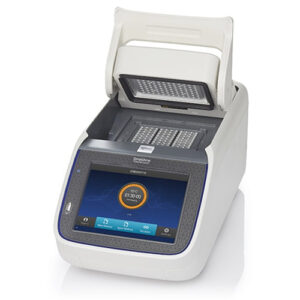
Applied Biosystems
Maintenance and Calibration of Veriti, Veriti DX, and ViiA7 PCR Systems
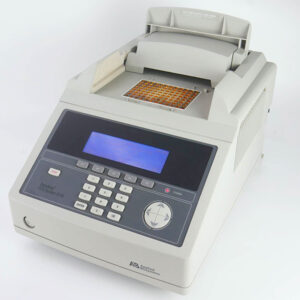
Applied Biosystems
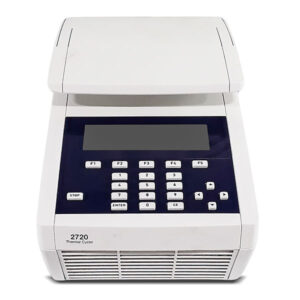
Applied Biosystems
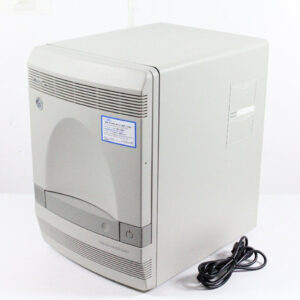
Applied Biosystems
Maintenance and Calibration of the ABI 7300 Real Time PCR System







Reviews
There are no reviews yet.